

Almost every organization can clearly explain what they do. Which projects are underway, what goals have been set, and what is planned for this year. However, when the conversation shifts to why these things are being done, it often becomes more difficult. The answer becomes more abstract or remains stuck in general terms that sound good but provide little guidance in daily work.
Words like impact, value, or quality come up quickly. They are not wrong, but rarely help with the choices that need to be made today. And that is precisely where we often see things go wrong. Not because organizations lack vision, but because the why does not provide enough direction for what is happening here and now.
In many organizations, the why is neatly documented in a mission or vision. It is displayed on the wall, featured on the website, and included in presentations. However, in practice, it hardly plays a role in how decisions are made, how priorities are set, or how people experience their work. Teams work hard, projects are completed, but meanwhile, the sense of purpose behind it all gradually fades into the background.
Simon Sinek once aptly expressed it in his TED Talk How Great Leaders Inspire Action: inspiring organizations don’t start with what they do, but with why they exist.
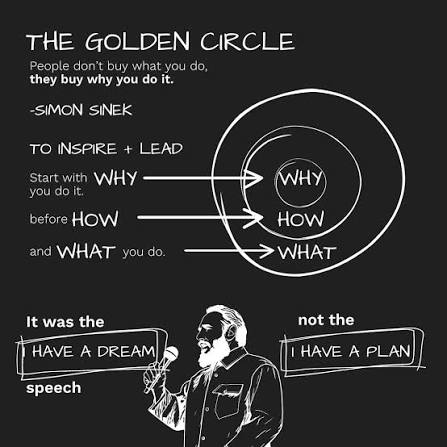
A why that does not influence choices, behavior, and priorities loses its power. It becomes decoration instead of a compass. Especially in moments of pressure or doubt, the why should provide direction. For example, with questions such as:
- What do we consciously say no to, even when something seems attractive?
- What takes priority when everything feels important?
- What behavior do we expect from each other when interests conflict?
- What do we no longer tolerate, especially when the pressure increases?
If the why doesn’t play a role, people sense that instinctively.
We also see what happens when it is approached differently. In organizations where the why is actively used as a benchmark, greater clarity emerges. Teams take responsibility more easily, decisions become more consistent, and the need for control decreases. Not because the work becomes easier, but because there is a shared reference point that helps in making considerations.
The essence lies in translating purpose into practice. The why only becomes meaningful when it is connected to strategic choices and daily priorities. Where do we spend our time and attention today? Which initiatives truly align with who we want to be as an organization? And how do we act when goals, deadlines, or interests conflict? At that moment, the why is no longer an abstract story but a practical tool.
Our own purpose is simple: helping organizations grow without losing their soul. For us, this is not about big words, but about how choices are made, how people collaborate, and how actions are taken when things get challenging. Whether it’s a strategic sales issue, a change initiative in healthcare, or bringing structure to a complex project, we always return to the same question: does this contribute to what this organization truly stands for?
Ultimately, it doesn’t really matter what you do or what role you fulfill. What makes the difference is whether you know why you do what you do, and whether that is reflected in the choices you make today. Not on paper, but in behavior.